
By DeepDive News Desk
April 22, 2026
As the global geopolitical landscape continues to evolve, a critical question is gaining prominence: are traditional superpowers losing influence, and are ‘middle powers’ like Pakistan stepping in to fill the gap?
Recent tensions between the United States and Iran have not only destabilized the Middle East but have also triggered ripple effects across the global economy. Disruptions in international shipping routes, pressure on supply chains, and volatility in oil prices have raised concerns worldwide.
🕊️ Unconventional Diplomacy in Islamabad
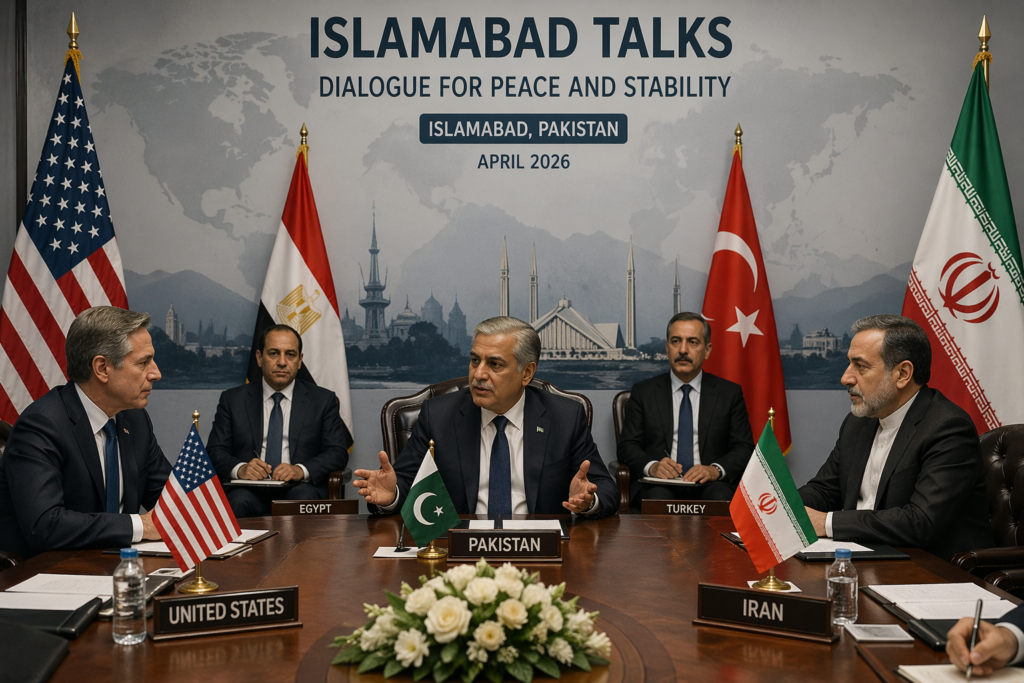
The recent round of negotiations held in Islamabad marked a notable departure from traditional diplomatic norms. Unlike previous high-stakes talks, these discussions were neither hosted under the supervision of the United Nations nor conducted in a European capital.
Instead, Pakistan emerged as a proactive mediator. Reports suggest that Egypt and Turkey were indirectly involved, highlighting a broader shift where regional actors are taking a more central role in conflict resolution.
⚖️ What Are ‘Middle Powers’?
In international relations, ‘middle powers’ refer to countries that may not possess the global dominance of superpowers like the United States or China, but still wield significant regional influence.
Countries such as Pakistan, Turkey, Egypt, and Saudi Arabia are increasingly being recognized in this category due to their diplomatic engagement, economic positioning, and strategic relevance.
🔄 A Changing Global Order
Historically, major global conflicts were mediated by leading world powers or Western institutions. However, current trends suggest a gradual transformation:
- Regional powers are becoming more assertive
- New diplomatic hubs are emerging
- The balance of global influence is shifting
📊 Pakistan’s Expanding Role
Pakistan’s involvement in facilitating dialogue between rival states signals its growing diplomatic weight. Its strategic location, close ties with regional players, and role in the broader Muslim world position it as a credible intermediary in times of crisis.
🔮 Looking Ahead
Analysts believe that if this trajectory continues, the center of global political influence may gradually shift from the West toward emerging regions in the East and Global South. In this evolving order, middle powers are likely to play a defining role.