The picturesque, snow-capped peaks surrounding the Bürgenstock luxury resort near Lucerne, Switzerland, are playing host to one of the most volatile diplomatic gambits of modern times.
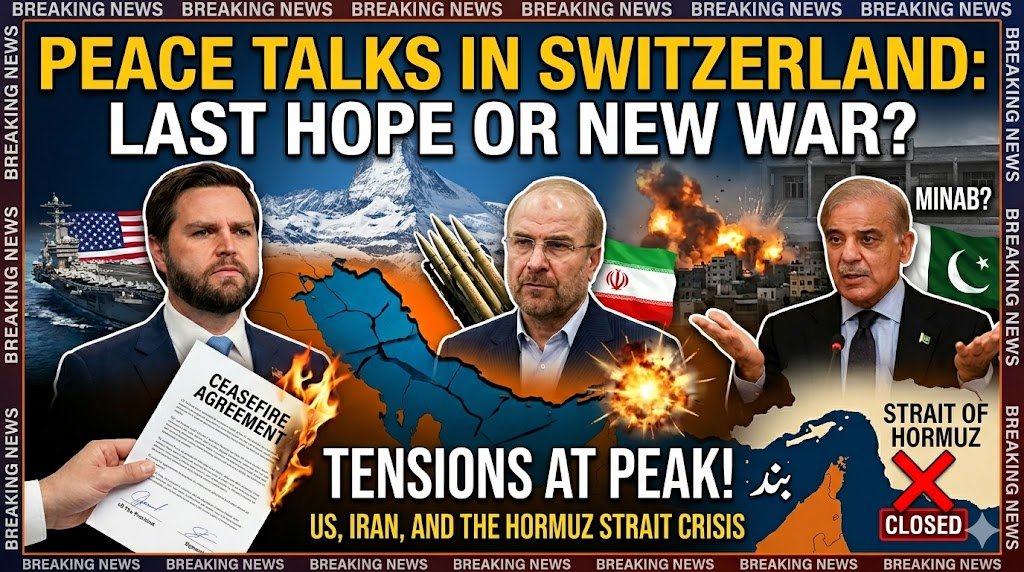
High-level delegations led by US Vice President J.D. Vance and Iranian chief negotiator Mohammad Bagher Ghalibaf have converged to hammer out the technical details of a permanent end to the intensive, multi-week US-Iran war. Orchestrated behind the scenes by Pakistani Prime Minister Shehbaz Sharif and military chief Field Marshal Asim Munir, these talks aim to solidify a fragile 14-point Memorandum of Understanding (MoU) signed just days ago by Presidents Donald Trump and Masoud Pezeshkian.
However, as negotiators sit down at the bargaining table, the 60-day interim ceasefire is already facing existential strain from severe brinkmanship in the Persian Gulf, a raging parallel conflict in Lebanon, and mounting political warfare back in Washington.
1. The Chokepoint: Posturing and Sabotage in the Strait of Hormuz
Hours before the opening session in Switzerland, Tehran injected immediate panic into global energy markets. The Islamic Revolutionary Guard Corps (IRGC) declared the Strait of Hormuz—the vital maritime artery through which 20% of the world’s petroleum passes—officially closed.
Iran claims the closure is a retaliatory response to ongoing Israeli military actions against Hezbollah in southern Lebanon, which it argues violate the spirit of the comprehensive ceasefire.
The immediate Western response, however, has been a blend of tactical skepticism and economic counter-threats:
- The Reality on the Ground: Speaking to reporters before his arrival, Vice President Vance stated that US intelligence has seen “no evidence” that maritime shipping has actually ground to a halt, suggesting Iran’s announcement may be strategic posturing.
- The “Guardian Angel” Tolls: President Donald Trump took to social media to warn that if Iran disrupts the toll-free transit promised in the 60-day MoU, the US will unilaterally impose heavy maritime tolls on vessels moving through the waterway. Trump asserted the revenue would serve as a financial reimbursement for “services rendered as the Guardian Angel to the countries of the Middle East.”
2. The Lebanon Agenda and Financial Demands
While Washington wants to focus heavily on long-term regional stabilization and nuclear transparency, the Iranian delegation has made its priorities clear. For Tehran, the Swiss summit must immediately address two non-negotiable pillars:
The Lebanon Wildcard
Despite the US-Iran ceasefire calling for an end to hostilities across “all fronts,” Israeli defense forces have continued targeted operations against Hezbollah. Chief negotiator Ghalibaf has asserted that the Lebanon conflict is the “main topic.” Behind the scenes, Iranian officials have reportedly informed regional proxies that they will completely stall on major concessions until Israel complies with a comprehensive cessation of operations.
Unfreezing Frozen Assets
Iran is aggressively pushing for the immediate release of billions of dollars in frozen financial assets currently held in Qatar. While the signed MoU outlines a massive $300 billion international recovery fund to help rebuild war-torn Iranian infrastructure, the immediate focus in Switzerland is unlocking these liquid funds.
The US delegation, which includes key Trump advisers Jared Kushner and Steve Witkoff, is attempting to leverage these assets to extract a massive concession: forcing Iran to allow International Atomic Energy Agency (IAEA) inspectors back into heavily bombed nuclear sites like Fordo, Natanz, and Isfahan for the first time since the war began.
3. Domestic Blowback and the Shadow of Minab
Even if Vance and Ghalibaf manage to bridge the diplomatic chasm in Switzerland, the deal faces a perilous road to ratification back in Washington. The brief but fiercely destructive war has left Capitol Hill deeply divided, with lawmakers aggressively debating the conflict’s massive strategic, financial, and human ledger.
“This is the worst foreign policy blunder in decades,” warned Republican Senator Bill Cassidy, echoing a growing chorus of lawmakers who believe the Trump administration conceded too much, too quickly, by waiving oil sanctions before securing verifiable nuclear disarmament.
Compounding this political gridlock is a searing congressional investigation into a devastating wartime intelligence failure. Early in the conflict, a US cruise missile strike hit an elementary school in the southern Iranian city of Minab, killing more than 175 people, mostly children.
While President Trump has signaled that American personnel will not face formal military prosecution for the tragedy, the horrific optics of the Minab strike have galvanized anti-war lawmakers. Congressional committees are demanding full transparency over the targeting breakdown, threatening to tie up necessary funding for the Middle East peace framework until the Pentagon delivers answers.
What’s Next at Bürgenstock?
With IAEA Director General Rafael Grossi slated to join the technical sessions, the next 48 hours will determine whether this 60-day window yields a historic grand bargain or a rapid return to open warfare. As Vice President Vance noted before boarding his flight to Europe, regional peace hinges on a delicate chicken-and-egg dilemma: “You’ve just got to stop the shooting for long enough to get the ceasefire to keep hold.”