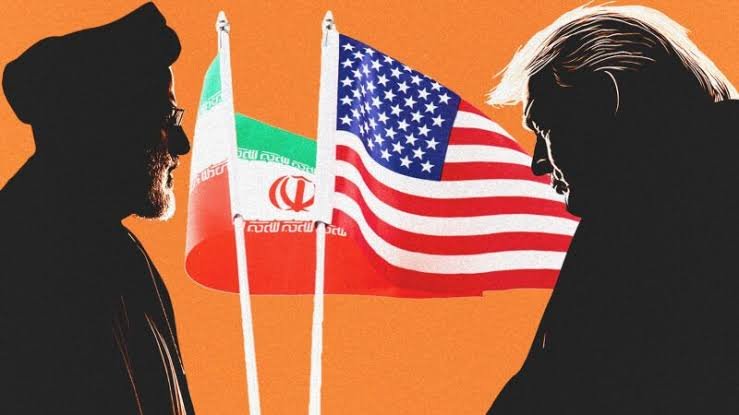
US President Donald Trump aggressively framed the upcoming meetings as a direct diplomatic breakthrough initiated by Tehran.
- The Truth Social Post: Trump took to his social media platform, Truth Social, announcing in all-caps: “IRAN HAS REQUESTED A MEETING. IT WILL TAKE PLACE TOMORROW IN DOHA!”
- The US Delegation: White House Press Secretary Karoline Leavitt confirmed that high-level US figures—including Special Presidential Envoy Steve Witkoff and Trump’s son-in-law and adviser Jared Kushner—are traveling to Doha. The White House insists that technical teams will meet on the sidelines of these high-level sessions to hammer out details regarding the implementation of a recent Memorandum of Understanding (MoU).
- The Strategic Objective: Speaking from the Oval Office, Trump noted that the meeting in Doha would be “perhaps important, perhaps not,” but explicitly stated that the ultimate goal remains the total “denuclearization of Iran.”
2. The Iranian Denial: Protesting Direct Contacts
Conversely, Iranian officials have pushed back strongly against Trump’s narrative, entirely denying that direct face-to-face negotiations or technical meetings are taking place.
- The Official Stance: Iranian Foreign Ministry spokesperson Esmaeil Baghaei explicitly stated, “Over the coming days, we will not have any negotiation meetings with the US side at any level.”
- The Focus on Frozen Assets: Tehran maintains that its experts are visiting Doha solely for a separate, localized purpose—namely, ensuring the implementation of the interim deal’s provisions regarding the release of $6 billion in frozen Iranian assets currently held in Qatari banks.
- Indirect Mediation over Direct Dialogue: Iranian Deputy Foreign Minister Kazem Gharibabadi clarified that while “consultations continue with mediator Qatar,” formal technical talks with the US are not slated for this week. This aligns with Iran’s long-standing preference for indirect diplomacy, using regional intermediaries like Qatar, Pakistan, and Oman to relay messages rather than sitting down directly with American envoys.
3. The Backdrop: Violent Flare-ups in the Strait of Hormuz
This conflicting rhetoric comes immediately after a severe weekend of tit-for-tat military strikes in the Persian Gulf, which threatened to collapse a recently signed ceasefire:
- The Attacks: Iran allegedly targeted a commercial cargo vessel near Oman, prompting US Central Command (CENTCOM) to respond with extensive airstrikes against Iranian air defense sites, communication systems, and drone facilities. In return, Iran’s Islamic Revolutionary Guard Corps (IRGC) launched missile and drone operations targeting US military installations in Kuwait and Bahrain.
- The De-escalation: Despite the violence, both nations agreed to a sudden pause in kinetic operations, utilizing the Doha trip as an essential “off-ramp” to prevent a wider regional war.
Summary of the Positions
| Attribute | United States Perspective | Iranian Perspective |
| Meeting Format | Asserts a direct meeting requested by Iran. | Rejects direct talks; insists on indirect mediation through Qatar. |
| Delegation Lead | Steve Witkoff and Jared Kushner. | Technical expert delegation. |
| Primary Goal | Permanent denuclearization of Iran and securing the Strait of Hormuz. | Verifying the release of $6 billion in frozen assets and lifting oil sanctions. |
Ultimately, while the public messaging remains polarized—with Trump projecting a position of American strength and Iran guarding its domestic posture against direct compliance—the reality on the ground indicates that both delegations are in the exact same city, working through Qatari mediators to salvage a fragile peace process.