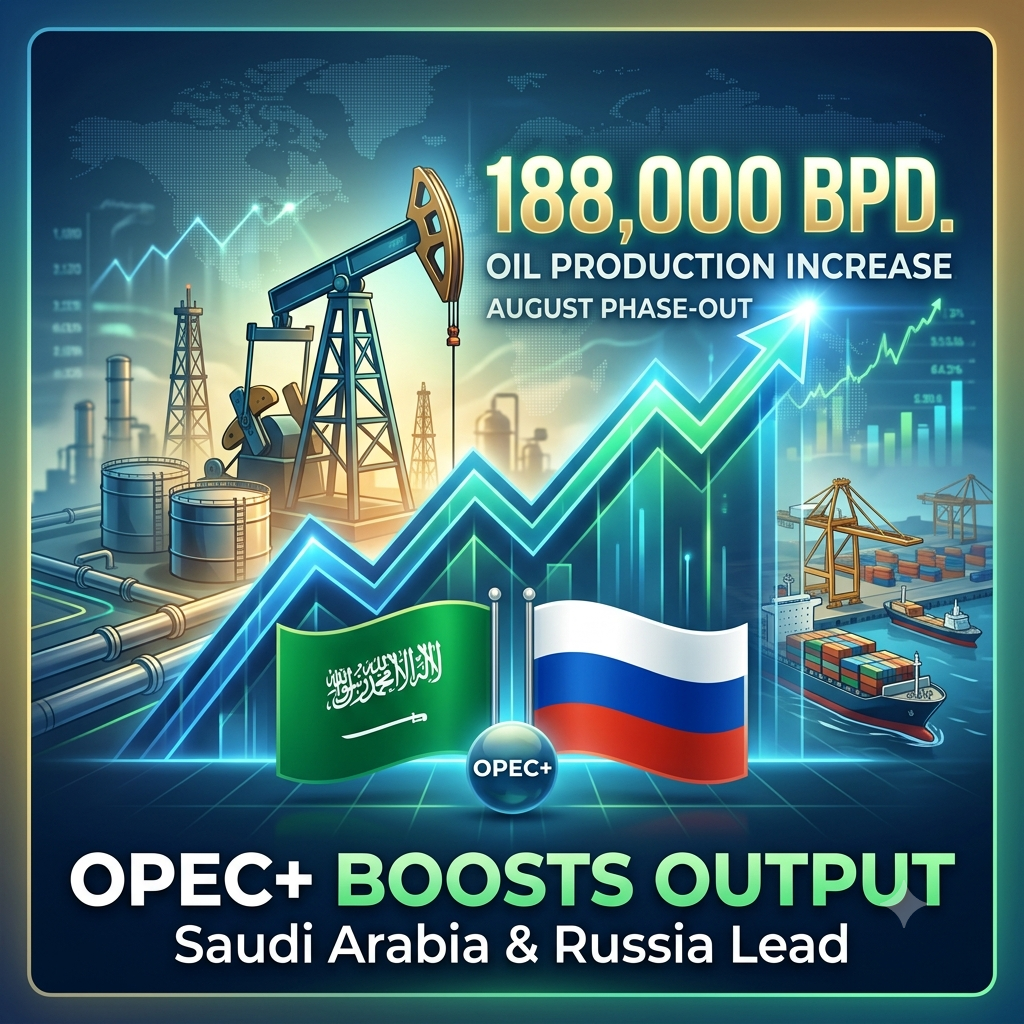
RIYADH — In a major move aimed at navigating shifting global energy trends, seven key members of the OPEC+ alliance, including Saudi Arabia and Russia, have announced a coordinated oil production increase of 188,000 barrels per day (bpd) starting in August 2026.
The decision came following a virtual meeting held on July 5, 2026, where member nations reviewed prevailing global macroeconomic indicators and regional market dynamics. The move marks the fifth consecutive monthly output adjustment by the group as part of its ongoing, data-driven strategy to phase out the voluntary production cuts initially enacted in April 2023.
Balancing Supply with Market Dynamics
The upcoming August hike represents a deliberate, calculated effort to restore crude supply to the market without triggering a pricing collapse. Crucially, the alliance has heavily emphasized its “cautious approach.” The participating countries explicitly noted that they retain the full operational flexibility to accelerate, pause, or entirely reverse these supply rollbacks if global demand shifts or economic headwinds emerge.
The production adjustment will be divided among seven participating nations based on their established monthly quotas.
August 2026 Production Increase Breakdown
| Country | Production Increase (bpd) |
| Saudi Arabia | 62,000 |
| Russia | 62,000 |
| Iraq | 26,000 |
| Kuwait | 16,000 |
| Kazakhstan | 10,000 |
| Algeria | 6,000 |
| Oman | 5,000 |
| Total Combined Increase | 188,000 |
Reassuring Stability & Compliance Commitments
Beyond simply adding barrels to the global supply, the alliance used the July session to address critical internal mechanisms. A primary focal point of the agreement is compliance and overproduction compensation.
“This phased increase provides an active window for participating countries to accelerate their compensation timelines for any overproduced volumes recorded since January 2024.” — OPEC+ Press Statement
The Joint Ministerial Monitoring Committee (JMMC) will continue to strictly monitor compliance metrics. The alliance reaffirmed its long-term objective of supporting comprehensive oil market stability by extending the final compensation deadlines through December 2026.
Easing Geopolitical Fractures
Industry analysts point out that this gradual supply expansion is partly supported by improving shipping and logistics infrastructure in the Middle East. The easing of regional tensions has allowed Gulf producers to resume regular maritime routes through critical choke points, providing the structural confidence needed to increase output targets.
OPEC+ will continue its rigorous oversight schedule by holding regular monthly review sessions. The seven participating nations are slated to meet next on August 2, 2026, to assess the immediate impact of this supply injection and finalize output quotas for the subsequent months.