1. The US-Iran Military Escalation
The US military’s announcement of a new wave of targeted strikes against Iran marks a significant and dangerous escalation in direct hostilities.
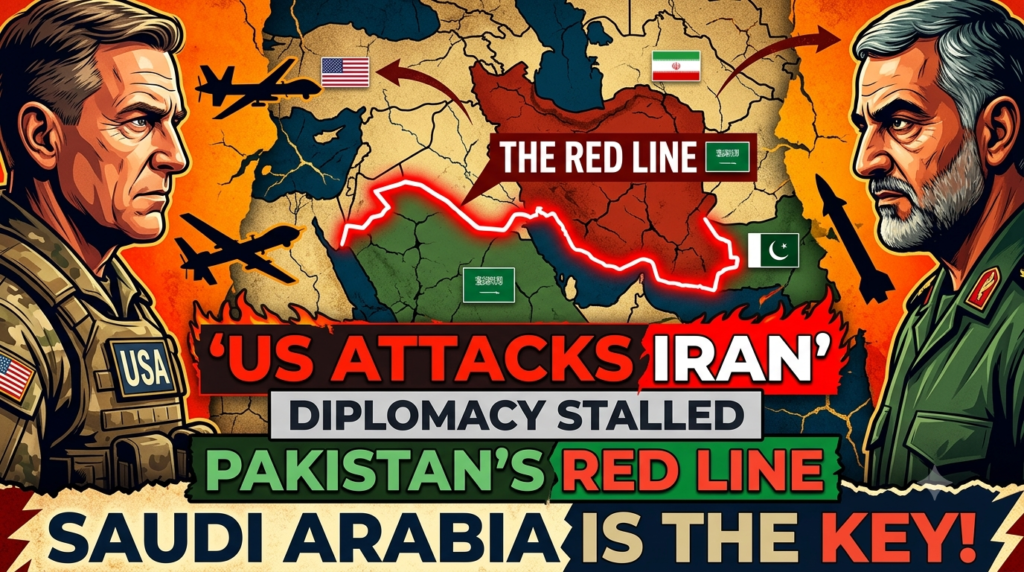
- The Targets: Reports of explosions in key cities like Ahvaz and Bushehr are highly strategic.
- Ahvaz is the capital of the oil-rich Khuzestan province, making it a critical economic artery for Iran.
- Bushehr is home to Iran’s primary nuclear power plant, meaning any military activity near it carries immense psychological and geopolitical weight.
- The Military Objective: These strikes are designed to degrade Iran’s defensive capabilities, disrupt its regional proxy networks, and signal absolute deterrence. However, striking targets deep inside Iranian territory risks triggering an all-out regional war, threatening global energy supply lines through the Strait of Hormuz.
2. The Diplomatic Standoff
Despite the kinetic escalation, the diplomatic messaging from both sides remains deeply polarized:
The US Stance: The White House has indicated that President Trump remains open to diplomacy. This is a classic “maximum pressure” tactic—using intense military and economic leverage to force an adversary to the negotiating table on highly unfavorable terms.
The Iranian Stance: Tehran has flatly rejected immediate talks, stating its current focus is entirely on national defense. For Iran, negotiating while under active bombardment is seen as a sign of weakness and surrender. Historically, Iran demands a complete halt to hostilities and the lifting of sanctions before any formal dialogue can begin.
3. Pakistan’s Strategic Stance: “Saudi Arabia is Our Red Line”
Perhaps the most complex regional reaction comes from Islamabad. Pakistan shares a nearly 900-kilometer border with Iran, yet it maintains deep-rooted economic, military, and religious ties with Saudi Arabia.
Pakistan’s high-level communication to Iran that “Saudi Arabia is our red line” is a critical diplomatic declaration. Here is what this positioning actually means:
| Strategic Pillar | What it Means for Pakistan and Iran |
|---|---|
| The Security Guarantee | Pakistan has a long-standing, quiet commitment to defend Saudi Arabia’s territorial integrity. If Saudi territory or holy sites are directly attacked (by Iran or its regional proxies), Pakistan is signaling it will be forced to intervene militarily. |
| The Delicate Balance | Pakistan cannot afford an enemy on its western border while already facing tensions on its eastern border with India. Thus, while it draws a hard line protecting Saudi Arabia, it also actively tries to prevent a total collapse of relations with Tehran. |
| Economic & Diaspora Pressures | Millions of Pakistani expatriates work in Saudi Arabia, sending back billions of dollars in crucial remittances. Simultaneously, Pakistan relies on Saudi financial aid and oil credit. This makes Riyadh’s stability directly tied to Pakistan’s economic survival. |
The Dilemma for Islamabad
Pakistan’s foreign policy has traditionally been one of neutrality and mediation in the Saudi-Iran rivalry. However, as direct conflict looms, remaining neutral becomes increasingly difficult. By clearly defining Saudi Arabia as a “red line,” Pakistan is attempting to deter Iran from expanding the conflict to the Gulf monarchies, hoping to contain the war before it forces Islamabad to make an incredibly difficult choice.