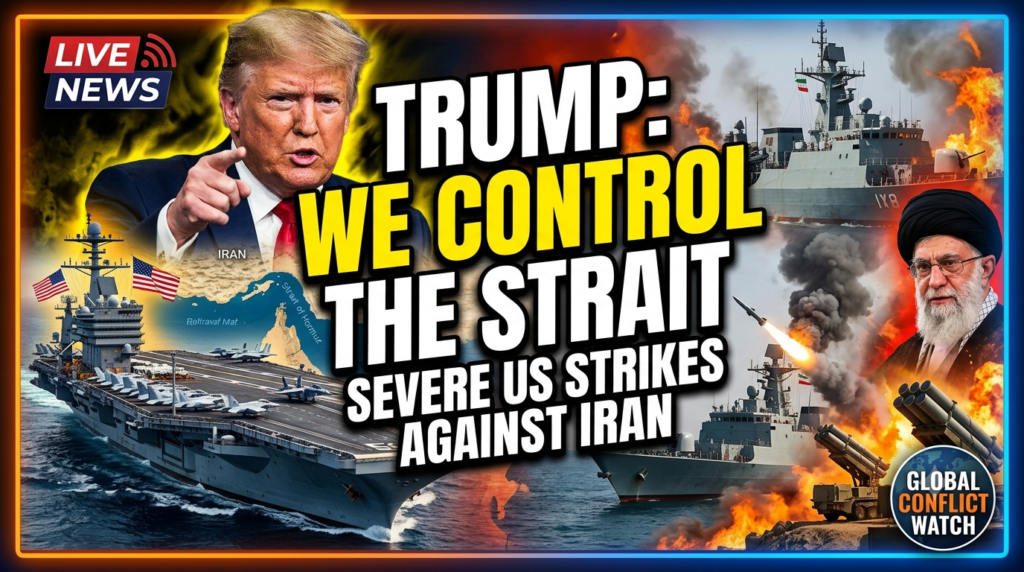

US President Donald Trump has confirmed that in response to the killing of American soldiers in the Middle East, US forces have launched severe strikes against Iranian targets. Trump stated, “We control the Strait of Hormuz, and Iran controls nothing.”
Detailed Contextual & Editorial Breakdown
To fully understand the weight of this statement, it can be analyzed through three key dimensions: the military trigger, the strategic rhetoric, and the geopolitical significance of the location mentioned.
1. The Catalyst: Casualties and Retaliation
- The Incident: The statement highlights a critical tipping point in international relations—the loss of American military personnel. In US foreign policy, the death of service members serves as a definitive “red line,” almost always necessitating a visible and proportional military response.
- The Action: The phrase “severe strikes against Iranian targets” indicates that the US military response was not merely symbolic. These operations typically target command and control centers, ammunition depots, or proxy militia bases tied to Iran’s Islamic Revolutionary Guard Corps (IRGC).
2. Rhetorical Strategy: “Iran Controls Nothing”
- Psychological Warfare: President Trump’s assertion that “Iran controls nothing” is a deliberate attempt to project absolute American hegemony while undermining the deterrence capabilities of the Iranian leadership.
- Projecting Power: By framing the conflict in absolute terms, the rhetoric aims to reassure domestic audiences and international allies of American military supremacy, while sending a direct warning to Tehran against further escalation.
3. The Chokepoint: The Strait of Hormuz
The mention of the Strait of Hormuz is the most geopolitically significant part of the statement.
- Global Oil Transit: The Strait of Hormuz is the world’s most critical oil chokepoint. Approximately one-fifth of the world’s petroleum passes through this narrow waterway between Oman and Iran.
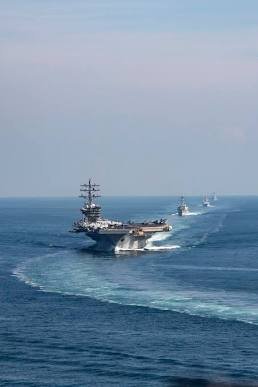
- Strategic Leverage: Iran has historically threatened to close the Strait in the event of a full-scale war, using it as economic leverage against the West. By claiming that the US “controls the Strait,” the statement challenges Iran’s primary geopolitical leverage, signaling that the US Navy is prepared to ensure the unhindered flow of global commerce by force if necessary.