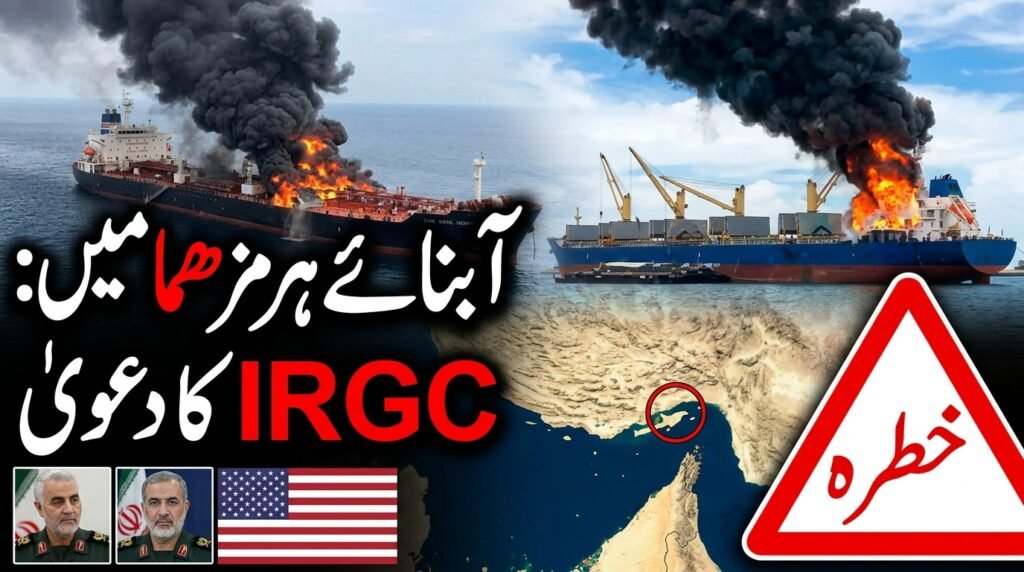
According to the Iranian Islamic Revolutionary Guard Corps (IRGC), two oil tankers have been disabled following explosions south of the Strait of Hormuz. Iran claims that these vessels were utilizing unsafe routes due to American pressure. Furthermore, they have warned that in the presence of U.S. aggression, this commercial transit route will no longer remain safe for the transport of oil and gas.
Detailed Analysis and Context
The Strait of Hormuz is one of the world’s most strategically vulnerable and economically vital chokepoints. This statement reflects a high-stakes escalation in maritime security and international relations.
1. The Incidents and the IRGC’s Role
- The Damage: The report indicates that two oil tankers were severely damaged (“disabled”) by explosions. The location—south of the Strait of Hormuz—places the incident right at the threshold of the Gulf of Oman, a frequent flashpoint for maritime sabotage.
- The Messenger: The announcement coming directly from the Islamic Revolutionary Guard Corps (IRGC) is highly significant. The IRGC’s navy operates extensively in the Strait and enforces Iran’s territorial waters and strategic interests. By being the primary source of the report, Iran positions itself as the dominant monitoring authority in the region.
2. The Narrative of “American Pressure”
- Route Selection: Iran’s claim that the tankers were using “unsafe routes under American pressure” suggests a conflict over naval navigation corridors. The U.S. and its allies frequently advocate for international transit lanes that keep shipping clear of direct Iranian interference, while Iran often demands vessels adhere to strict regulatory protocols within what it considers its sphere of influence.
- Shifting Blame: By blaming U.S. pressure for forcing ships into unsafe waters, Tehran attempts to deflect international responsibility for the safety of the strait, framing Western maritime coalitions as the actual destabilizing force.
3. The Warning: Strategic and Economic Implications
- Energy Security: The Strait of Hormuz is the artery through which roughly one-fifth of the world’s petroleum passes. Any explicit warning from Iran that the route is “no longer safe for oil and gas” sends immediate shockwaves through global energy markets, typically resulting in spikes in crude oil prices and soaring maritime insurance premiums.
- Deterrence Strategy: This statement serves as a classic deterrence signal. Iran is effectively warning the United States and its allies that if Iranian oil exports are choked by sanctions or if Western military presence increases (“U.S. aggression”), Tehran has the leverage to disrupt the energy supply chain of the entire global economy.
Key Takeaway: This development underscores a volatile cycle of brinkmanship. While Iran frames its stance as a defensive reaction to foreign military encroachment, global maritime powers view such incidents as direct threats to freedom of navigation in international waters.