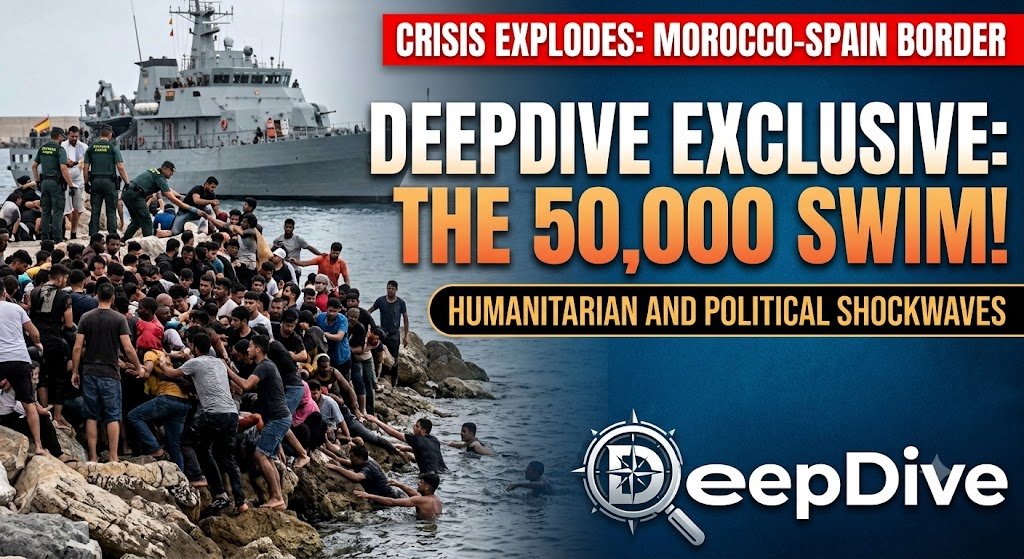

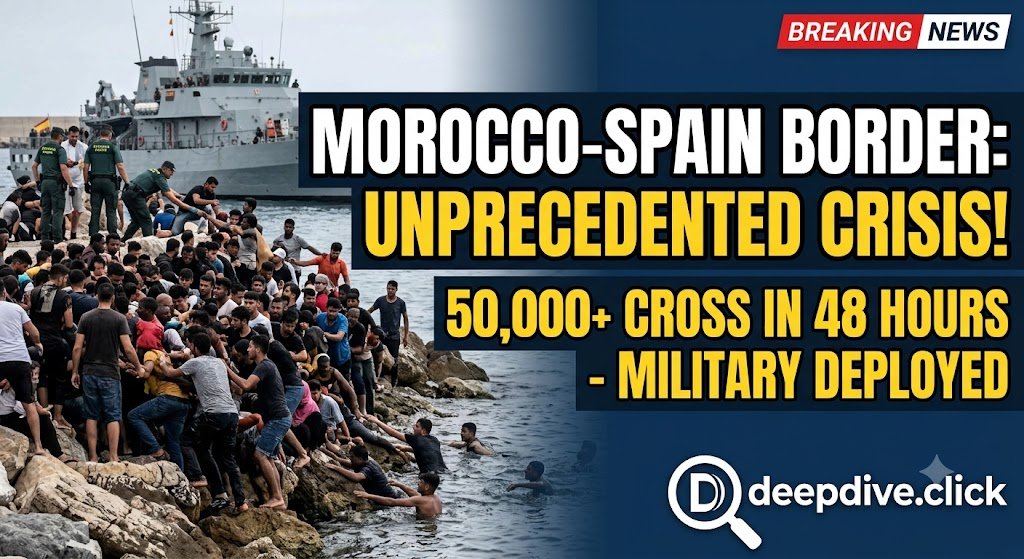
A dramatic humanitarian and geopolitical crisis recently unfolded along the North African border, as tens of thousands of migrants attempted to cross from Morocco into the Spanish enclave of Ceuta. Within a span of just 48 hours, the influx overwhelmed local infrastructure, triggered military deployment, and sent shockwaves through the European Union.
Here is a detailed deep dive into the events, the underlying causes, and the current situation on the ground.
1. Executive Summary
- Location: The Spanish autonomous city of Ceuta, located on the North African coast bordering Morocco.
- Timeline: Late July 2026 (peak events occurring July 30–31).
- Scale: An estimated 50,000 to 60,000 individuals attempted or succeeded in crossing the border within two days.
- Impact: Considering Ceuta has a resident population of around 85,000, the sudden arrival of thousands of people created an unprecedented operational and humanitarian bottleneck.
2. How the Events Unfolded
The surge began in the final days of July along the Moroccan coastal towns of Fnideq and Tetouan.
- Mass Gathering: Thousands of youths, alongside families with women and children, converged on the beaches near the border points.
- Breaching the Maritime Barrier: Migrants circumvented border fences by swimming around the breakwaters at Tarajal and Benzú, while others utilized rubber tubes, small inflatable boats, or attempted to walk across low-tide sections.
- Infrastructure Collapse: Ceuta’s reception facilities and temporary shelters instantly reached maximum capacity, leaving thousands stranded in public parks, streets, and coastal areas without adequate food or shelter.
3. Key Drivers Behind the Surge
Understanding why this massive movement occurred requires looking at both misinformation and economic reality:
Human Trafficking & Misinformation
According to official statements, human trafficking networks exploited a recent judicial ruling in Spain, falsely spreading rumors across social media that individuals arriving by sea would no longer face immediate deportation. This generated a sudden “gold rush” effect among vulnerable populations.
Economic Pressure
Many young Moroccans and sub-Saharan migrants cited high youth unemployment, rising inflation, and a lack of local economic opportunity as their primary motivation for seeking entry into Europe.
Border Patrol Dynamics
Initial reports indicate a temporary drop in enforcement density on the Moroccan side of the border during the early hours of the surge, allowing large crowds to assemble without early intervention.
4. Humanitarian and Safety Toll
The crossing attempt was fraught with danger.
- Casualties: At least 57 people drowned or suffered fatal injuries during stampedes near the rocky breakwaters.
- Emergency Response: The Spanish Red Cross, maritime rescue units, and military personnel conducted round-the-clock operations to pull exhausted swimmers from the sea and render medical aid.
5. Official Reactions
Spain
Spanish Prime Minister Pedro Sánchez deployed army units and additional national security forces to assist local police, describing the sudden mass entry as a serious breach of national integrity and security.
European Union
EU officials reaffirmed support for Spain, emphasizing border security enforcement while urging fast-track processing and orderly returns in compliance with international law. Surrounding countries, including France and Italy, temporarily heightened border surveillance.
6. Current Status
- Returns: Due to severe weather, lack of shelter, and swift law enforcement action, over 48,000 individuals have either returned voluntarily or been processed back into Morocco.
- Restoration of Order: Moroccan security forces have since reinforced perimeter security using water cannons and barricades, effectively stabilizing the border perimeter.
Deep Dive Takeaway: The events in Ceuta highlight the ongoing complexity of Mediterranean migration—where digital misinformation, economic hardship, and geographic proximity intersect to create sudden global news events.