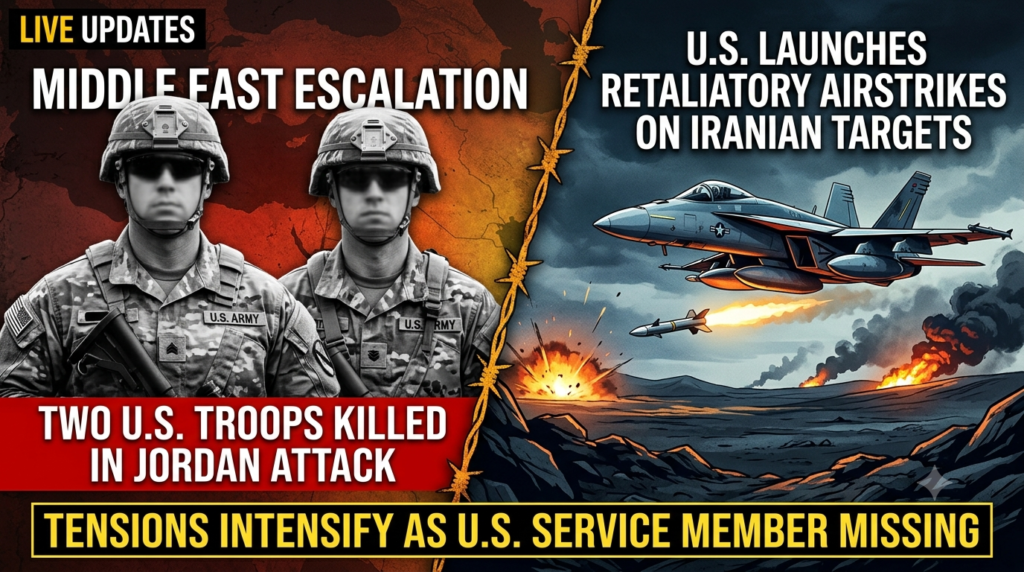
Tensions in the Middle East have escalated into a dangerous new phase following a direct Iranian missile and drone attack on a air base in Jordan. The strike resulted in the deaths of two U.S. service members, left one missing in action, and injured several others.
In immediate response, the United States launched a series of heavy retaliatory airstrikes against Iranian targets, targeting military infrastructure, underground weapons storage facilities, and naval capabilities.
Key Highlights of the Conflict
- The Jordan Attack: Iranian forces targeted Muwaffaq Salti Air Base in Jordan with a barrage of ballistic missiles and attack drones.
- U.S. Casualties Identified: The Pentagon identified the fallen soldiers as Pvt. Isabella Gonzales, 19, and 1st Lt. Tyler James Feehan, 25, assigned to Army Air Missile Defense units. Search efforts for the missing service member were initiated immediately.
- U.S. Retaliation: U.S. Central Command (CENTCOM) ordered fighter jets, warships, and long-range drones to strike IRGC (Islamic Revolutionary Guard Corps) assets, command nodes, and logistics routes inside Iran.
- Collateral Infrastructure Impact: Regional air defenses in Kuwait, Bahrain, and Saudi Arabia intercepted incoming threats, while strikes in southern Iran reportedly damaged transport routes and power facilities near the Strait of Hormuz.
Details of the Strike on Muwaffaq Salti Air Base
The attack occurred when Iranian forces launched a coordinated strike combining high-speed ballistic missiles and loitering munitions aimed at key installations hosting U.S. and coalition forces in Jordan. Air defense batteries engaged multiple targets, but direct hits caused significant structural damage to defensive units on site.
Four additional U.S. service members sustained injuries requiring emergency evacuation to Jordanian medical facilities; all four have since been treated and discharged.
“Godspeed, heroes. Their sacrifice only stiffens our resolve.”
— U.S. Secretary of Defense Pete Hegseth
U.S. Retaliatory Strikes and Military Operations
Following authorization from Washington, CENTCOM initiated multiple waves of precision airstrikes targeting IRGC facilities. The stated objectives were twofold:
- Neutralize Threat Operations: Degrade Iran’s capacity to launch further missile and drone barrages against allied forces in the region.
- Protect Maritime Corridors: Swiftly target Iranian coastal assets threatening commercial shipping lanes near the Strait of Hormuz.
CENTCOM reported destroying underground weapons caches, surveillance stations, and logistical hubs.
| Area of Impact | U.S. Action / Targets | Iranian & Regional Impact |
| Jordan Base | Air defense deployment against barrage | 2 U.S. killed, 1 missing, 4 evacuated |
| Southern Iran | Strikes on IRGC bases and logistics nodes | Key bridges, weapons storage, and regional power assets damaged |
| Persian Gulf | Naval and air patrols around shipping corridors | Commercial vessel detours and heightened shipping insurance rates |
Geopolitical Implications & Escalation Risks
This recent exchange marks a severe breakdown in diplomatic backchannels and fragile ceasefire understandings. Regional analysts highlight several escalating factors:
- Widening Regional Reach: The direct targeting of bases inside Jordan—long viewed as a stable pillar of regional security—signals a broader operational theater involving Gulf nations including Kuwait, Bahrain, and Saudi Arabia.
- Strait of Hormuz Friction: Disruptions to commercial navigation and naval blockades threaten global energy supply chains, pushing crude oil prices upward and raising economic volatility.
- Heightened Rhetoric: Iranian state communications warned of “unforgettable lessons,” while Washington maintained that attacks on American personnel will face overwhelming military force.
What Lies Ahead?
As U.S. forces conduct continuous combat air patrols across the region, international partners are calling for restraint to avoid a full-scale regional conflict. However, with U.S. forces actively engaged in defensive and offensive operations, the immediate focus remains on securing regional airspaces, protecting deployed personnel, and maintaining stability across critical trade routes.