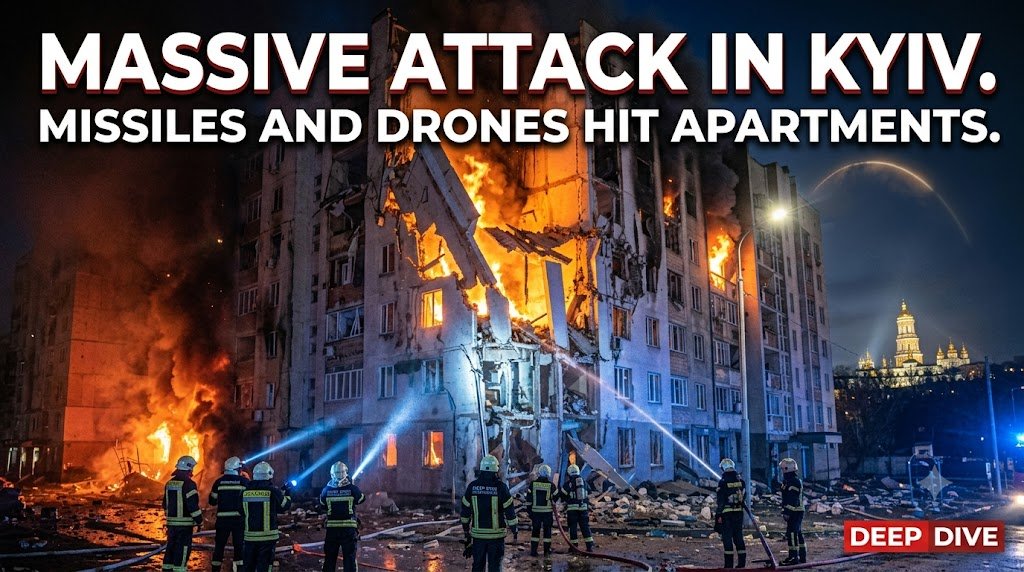

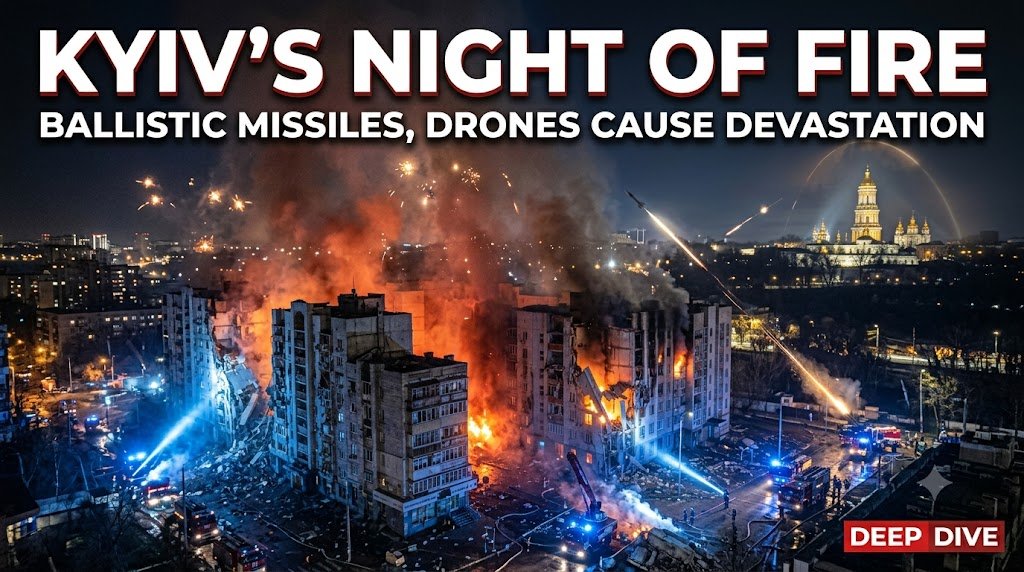
KYIV — In one of the most intense aerial bombardments targeting the Ukrainian capital since the full-scale invasion began, Russian forces launched a coordinated barrage of ballistic missiles and strike drones overnight. The multi-wave assault sent shockwaves across Kyiv, igniting fires in multiple districts, severely damaging residential and municipal infrastructure, and leaving casualties in its wake as rescue crews worked through the rubble.
The Scale of the Attack
Beginning in the early hours around 1:30 a.m. local time, air raid sirens pierced the night, quickly followed by the dull thuds of air defense interceptions and heavy detonations echoing through the city center. According to data released by the Ukrainian Air Force and State Emergency Service:
- Aerial Weapons Tracking: Russia deployed over 160 total aerial weapons across Ukraine, including up to 41 missiles—dominated by fast-flying Iskander-M and hypersonic Zircon ballistic systems—alongside 125 Shahed-type attack drones.
- Primary Target Zone: President Volodymyr Zelenskyy confirmed that the primary focus of the missile trajectory was concentrated squarely on the capital.
- Interception Tally: Ukrainian air defense forces and electronic warfare units successfully intercepted or suppressed 108 drones and 18 incoming missiles. However, several ballistic strikes breached defenses, hitting direct targets or dropping high-explosive debris across populated urban zones.
“The missiles just kept coming one after another. The explosions were powerful… I thought that life was just about to end.”
— Ganna Zagorodnia, 47, Kyiv Resident
Destruction Spans Five Capital Districts
Emergency services responded to emergency calls across at least five distinct districts of Kyiv—including Shevchenkivskyi, Solomyanskyi, Sviatoshynskyi, Desnianskyi, and Podilskyi:
| District | Structural Impact & Emergency Response |
| Shevchenkivskyi | Multi-story non-residential buildings engulfed in flames; severe blast wave damage to the ground vestibule and ceiling of the historic Lukyanivska metro station, forcing a temporary transit pause. |
| Solomyanskyi | Direct impact and debris caused heavy destruction to a five-story apartment complex and industrial/office premises. First responders pulled survivors from collapsed structures. |
| Sviatoshynskyi | Firefighters rescued four individuals trapped inside a burning residential private home during active shelling. |
| Desnianskyi & Dnipro | Open-area and non-residential site blazes doused by fire crews following fallen drone fragments and rocket shrapnel. |
The official casualty count reported fatalities alongside dozens injured—ranging from shrapnel wounds to blast trauma—as cleanup and search operations continue.
       NIGHT RAID OVERVIEW
   ┌───────────────────────────┐
   │  41 Missiles Launched     │ ──► Ballistic (Iskander-M / Zircon)
   │ 125 Drones Launched       │ ──► Kamikaze (Shahed/Geran variants)
   └─────────────┬─────────────┘
                 │
                 ▼
   ┌───────────────────────────┐
   │ Air Defense Interceptions │ ──► 108 Drones & 18 Missiles Intercepted
   └─────────────┬─────────────┘
                 │
                 ▼
   ┌───────────────────────────┐
   │ Impacts in 5 Kyiv Zones   │ ──► Residential, Metro, Industrial & Utilities
   └───────────────────────────┘
The Tactical Backdrop: An Asymmetric Escalation Cycle
The sheer density of ballistic missiles used in this strike highlights a shifting tactical strategy by Moscow:
- Exploiting Air Defense Shortages: Ballistic missiles move at high velocities along steep trajectories, making them significantly harder to shoot down compared to cruise missiles or slow drones. Intercepting them requires advanced surface-to-air missile batteries such as the U.S.-made MIM-104 Patriot or European SAMP/T—systems currently in scarce supply across Ukrainian frontline and rear sectors.
- Tit-for-Tat Fuel Infrastructure War: Moscow claimed its assault targeted drone production facilities and dual-use logistics centers. However, Western military analysts note the attack closely follows deep-tier Ukrainian asymmetric strikes against Russian oil depots (including sites in the Stavropol region) and Black Sea oil transport tankers near Novorossiysk. As Ukraine hits Russian fuel supply nodes, Russia responds by applying maximum pressure on Ukrainian cities to strain air defense stocks.
Political Realities & The Air Defense Bottleneck
In the immediate aftermath, Ukrainian leadership renewed urgent appeals to Western allies for anti-ballistic systems and interceptor munitions.
With Russia launching over 1,400 drones and dozens of ballistic weapons in weekly cycles across the country, Ukraine’s defense envelope is tested to its absolute limit. Discussions surrounding co-production licenses for Patriot interceptors remain active, but ramping up factory output and delivery timelines takes months to years—leaving Ukrainian cities reliant on existing stockpiles to weather the night sky.