The Aeon Mall Collapse and Secondary Blast
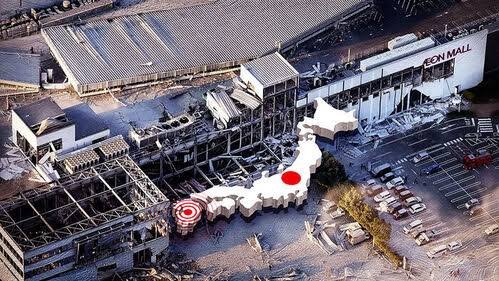
The most severe single incident occurred at the Aeon Mall in Kashima, Kumamoto’s largest shopping complex housing approximately 200 stores.
- The Incident: Following the initial tremors, management evacuated shoppers and employees from the complex. Approximately an hour later, a massive explosion ripped through one side of the structure, tearing off walls, exposing steel beams, and scattering heavy wreckage across the parking lot.
- Suspected Gas Leak: Rescue workers reported a strong odor of gas inside the damaged building. Authorities suspect a liquefied petroleum gas (LPG) leak caused the blast, though automatic shut-off systems are standard during seismic activity in Japan.
- Rescue Operations: Around 170 Japan Self-Defense Forces (JSDF) personnel, alongside specialized fire-rescue teams and police, hauled 8 survivors out of the rubble. Three of those pulled from the debris later succumbed to their injuries, including two women in their 20s. As of Wednesday, several workers remain unaccounted for.
                     7.1-Magnitude Earthquake
                                │
       ┌────────────────────────┴────────────────────────┐
       ▼                                                 ▼
Aeon Mall Secondary Explosion                    Widespread Infrastructure
• Outer walls blown outward                      • Buckled highways & bridges
• 8 pulled from rubble                           • Nippon Paper chimney collapse
• LPG gas leak suspected                         • 36,000+ power outages
Broader Damage Across Kyushu
The seismic shocks severely impacted central and southern Kyushu:
- Factory Disaster: At a Nippon Paper Industries facility in nearby Yatsushiro, a giant industrial chimney collapsed, leaving 7 workers missing and 4 critically injured.
- Historical & Urban Damage: Parts of the stone perimeter walls of the historic Kumamoto Castle collapsed, repeating damage sustained during the major 2016 Kumamoto earthquake.
- Transport & Lifelines: Buckled roads and cracked highways disrupted road traffic across the prefecture, and a section of a bridge over the Kumagawa River in Yatsushiro collapsed into the water. High-speed bullet train (Shinkansen) services were immediately halted after tremors injured several onboard passengers.
- Utilities & Heat Hazard: Over 36,000 households lost power. With summer temperatures climbing to 34°C (93°F), local disaster management authorities warned of high risks of heat-related illnesses for displaced residents.
Medical & Emergency Response
Hospitals in affected cities like Uki and Kumamoto reported being severely overstretched. One facility in Uki temporarily halted new emergency admissions after treating 86 victims within hours, while others operated on emergency backup generators due to grid failures.
Prime Minister Sanae Takaichi held an emergency press briefing in Tokyo, declaring the recovery effort a “race against time”:
“Even now, there are people waiting to be rescued… We will marshal all available resources on the ground to save and rescue as many people as possible.”
More than 4,500 military troops, along with regional police and fire personnel, have been mobilized across southern Japan to clear landslide debris, search for missing individuals, and assist the roughly 260,000 residents instructed to take shelter in emergency evacuation centers.
Summary of Key Details
| Metric / Aspect | Event Details |
| Magnitude | 7.1 $M_w$ |
| Epicenter | ~20 km (12 miles) south of Kumamoto City |
| Confirmed Deaths | 13+ |
| Major Focal Point | Secondary explosion & structural collapse at Aeon Mall |
| Evacuation Directives | ~260,000 residents in Kumamoto Prefecture |
| Troops Deployed | ~4,500 Self-Defense Force personnel |