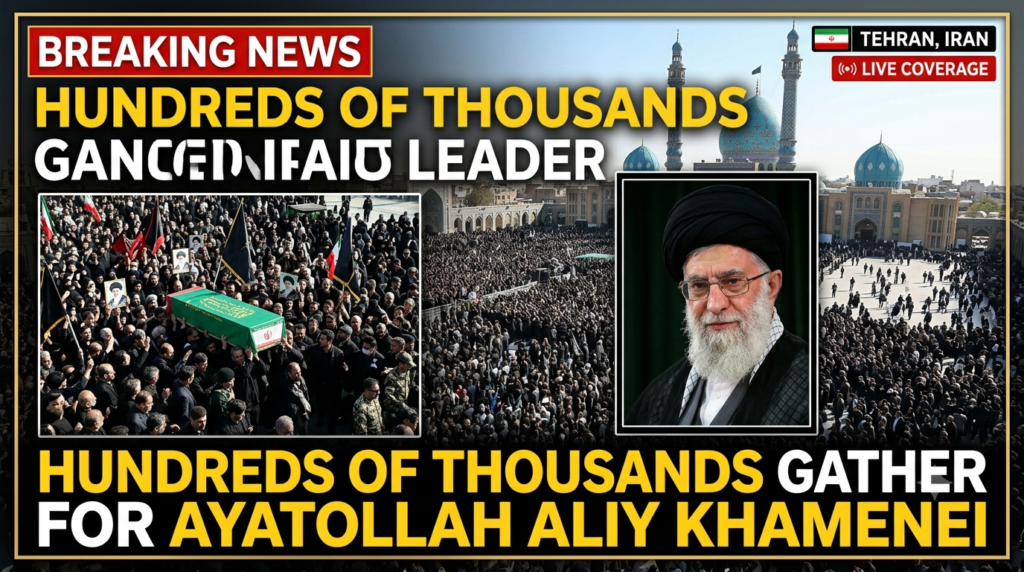

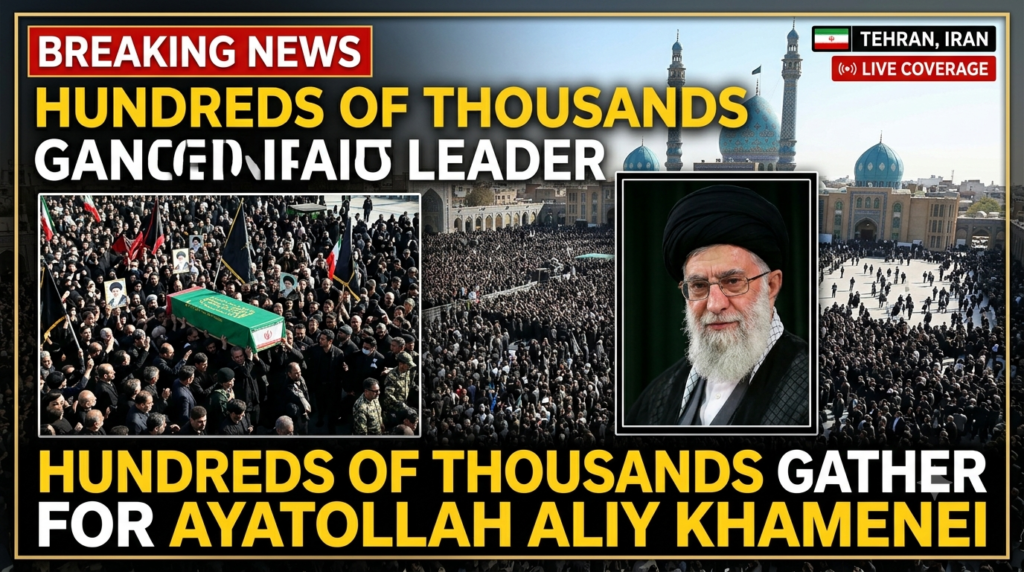
TEHRAN, IRAN — Hundreds of thousands of black-clad mourners flooded the streets of Iran’s capital on Monday for a massive funeral procession honoring the country’s late Supreme Leader, Ayatollah Ali Khamenei. The historic turnout followed a two-day period where Khamenei’s body lay in state at the central Imam Khomeini Grand Mosalla Mosque complex.
The 86-year-old cleric, who ruled Iran for over 35 years, was killed alongside several family members on February 28 during the opening hours of a major conflict involving joint United States and Israeli airstrikes targeting strategic compounds in Tehran. Due to the intense conflict that followed, the state funeral ceremonies were delayed for over four months before finally commencing this week.
Massive Crowds Fill the Capital
State broadcaster IRIB showed helicopter footage of sea-like crowds stretching for miles down Tehran’s major thoroughfares, starting from the Grand Mosalla mosque and moving down towards Azadi (Freedom) Square. Observers noted that the crowd density appeared to rival the historic 2020 funeral procession of Revolutionary Guard General Qassem Soleimani.
Mourners surrounded a flag-draped truck carrying the coffins of Ayatollah Khamenei and his family members. The vehicle was specially decorated to look like the ornamental grating of a holy shrine, allowing onlookers to toss scarves and personal items against the enclosure to receive blessings. Due to intense summer temperatures, security forces used firetruck ladders to spray misted water over the tightly packed crowds to prevent overheating.
Regional and Geopolitical Messaging
The multi-day funeral is being heavily utilized by the Iranian government to project political continuity and national strength. High-profile delegations and foreign dignitaries from neighboring countries—including Iraq, Pakistan, and Central Asian states—reportedly arrived in Tehran to pay their respects. High-ranking representatives from Hamas and Hezbollah were also present.
Prominent Iranian officials, including President Masoud Pezeshkian and the newly appointed IRGC Commander Ahmad Vahidi, attended the public ceremonies.
A Notable Absence: Notably missing from the public eye was Mojtaba Khamenei, the late leader’s son who was named his successor shortly after the assassination. Analysts suggest his absence from the public procession is likely due to extreme security concerns and recovery from injuries sustained during the initial February strikes.
What Lies Ahead for the Week-Long Mourning
Iranian authorities have declared several days of public holidays, shutting down local airspace, roads, and daily commerce to accommodate the massive security presence and logistical requirements of the event.
The procession through Tehran marks only the beginning of a week-long journey across the region:
- Tuesday: The bodies will be taken to the clerical hub of Qom.
- Wednesday: The procession will travel across the border into Iraq to pass through the Shiite holy cities of Najaf and Karbala.
- Thursday: The final burial will take place in Ayatollah Khamenei’s birthplace at the Imam Reza Shrine in Mashhad, northeastern Iran.
Meanwhile, ongoing diplomatic channels continue to observe the political landscape in Tehran closely, with international negotiations largely on pause until the official mourning period concludes.