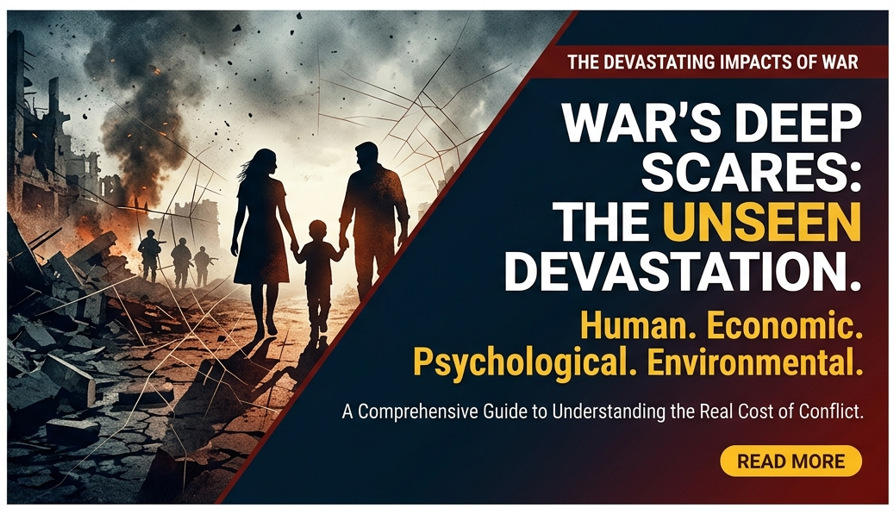

When we think of war, the mind immediately goes to the front lines—the sound of explosions, the clash of armies, and the immediate political fallout. But the true cost of war extends far beyond the battlefield. War is a catastrophic event that tears apart the very fabric of human civilization, leaving scars that take generations to heal.
From the loss of innocent lives to the total collapse of economies, the consequences of armed conflict are profound and far-reaching. Here is a detailed look at the true impacts of war.
1. The Human Cost: Loss of Life and Casualties
The most tragic and irreversible consequence of any war is the loss of human life.
- Innocent Civilians: Modern warfare rarely spares the innocent. Millions of civilians—including women, children, and the elderly—lose their lives as “collateral damage.”
- The Brave Soldiers: Young men and women are sent to the front lines, and many never return, leaving behind grieving families, broken homes, and orphaned children.
- Severe Injuries: For every life lost, many more are permanently disabled, losing limbs or suffering debilitating physical injuries that change their lives forever.
2. Psychological Trauma: The Invisible Wounds
The physical wounds of war might heal, but the mental scars often last a lifetime. War creates a psychological crisis that affects both combatants and survivors.
- PTSD (Post-Traumatic Stress Disorder): Soldiers and civilians alike suffer from nightmares, severe anxiety, and flashbacks of the horrors they witnessed.
- Childhood Trauma: Children raised in war zones grow up under constant fear, sirens, and explosions. This chronic stress stunts their psychological development and leaves them with lifelong anxiety.
- Generational Grief: The collective grief of losing loved ones, homes, and a sense of security creates a deeply traumatized society.
3. Economic Collapse and Poverty
War is an incredibly expensive endeavor that destroys wealth rather than creating it. It plunges even prosperous nations into deep economic crises.
- Destruction of Infrastructure: Roads, bridges, factories, power grids, and communication networks are targeted and destroyed, halting all economic activity.
- Inflation and Scarcity: As supply chains break down, the cost of basic necessities like food, clean water, and medicine skyrockets, leading to widespread starvation.
- The Burden of Debt: Governments divert all their financial resources toward buying weapons and funding the military, leaving nothing for education, healthcare, or public welfare. Rebuilding a post-war nation takes decades and billions of dollars.
4. Displacement and the Refugee Crisis
When homes become battlegrounds, people are forced to flee. War creates unprecedented humanitarian crises by displacing millions of people.
| Type of Displacement | Description | Impact |
| Internally Displaced Persons (IDPs) | People forced to flee their homes but who remain within their country’s borders. | They often live in overcrowded, unsafe camps with little access to food or sanitation. |
| Refugees | People who cross international borders to seek safety in other countries. | They face identity crises, language barriers, discrimination, and the painful reality of losing their homeland. |
5. Environmental Degradation
Nature is often the forgotten victim of war. The environmental damage caused by military conflicts can be permanent.
- Toxic Pollution: The use of explosives, chemical weapons, and heavy machinery releases toxic gases and heavy metals into the air, soil, and water sources.
- Deforestation and Habitat Loss: Scorched-earth tactics and heavy bombing destroy forests, wipe out wildlife, and disrupt ecosystems.
- Unexploded Ordnance: Landmines and unexploded bombs remain buried in the ground for decades after the war ends, making vast areas of land unusable for farming and dangerous for human life.
6. Social and Cultural Destruction
War does not just destroy buildings; it destroys communities, culture, and history.
- Loss of Heritage: Ancient monuments, museums, libraries, and historical sites are often looted or bombed, erasing centuries of human history and cultural identity.
- Breakdown of Law and Order: In the absence of a stable government, crime rates spike. Human trafficking, looting, and violence become rampant.
- The Education Gap: Schools and universities close down, depriving an entire generation of their right to education and a better future.
A Final Thought
“War does not determine who is right — only who is left.” — Bertrand Russell
There are no real winners in a war. While politicians and military leaders may claim victory on paper, the ground reality is always a loss for humanity. True strength lies not in the ability to wage war, but in the wisdom to maintain peace, engage in dialogue, and protect the shared future of our planet.