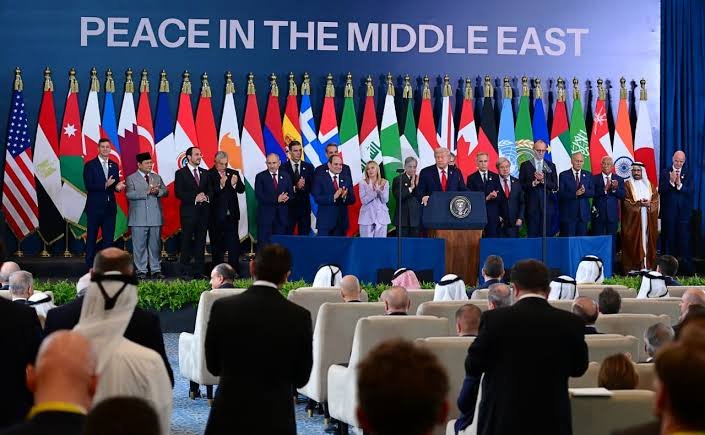

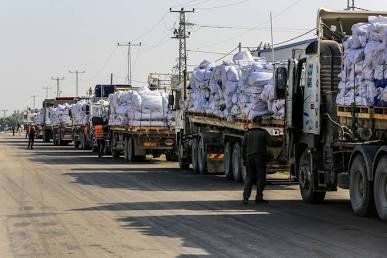
The Middle East remains the focal point of intense international diplomacy as world powers, regional mediators, and multilateral bodies navigate two interconnected crises: the humanitarian imperative and post-conflict governance in Gaza, and persistent security threats to commercial shipping through the Strait of Hormuz.
Indian Institute of Logistics
Both arenas carry severe geopolitical and economic consequences, shaping global energy markets, international trade routes, and the future framework of regional security.
Indian Institute of Logistics
1. Gaza: Navigating Diplomatic Frameworks and the Humanitarian Crisis
Diplomatic initiatives surrounding Gaza center on balancing immediate aid delivery with long-term political and security architecture. While ceasefire negotiations and mediation efforts have periodically reduced active combat thresholds, transforming fragile truces into durable stability remains a complex challenge.
Welcome to the United Nations
The Humanitarian Access Challenge
Despite international calls and UN resolutions aimed at easing access restrictions, humanitarian conditions inside the Gaza Strip remain critical:
UNSCO
- Displacement and Basic Needs: Over 1.8 million people—nearly the entire population—remain displaced. Access to clean water, sanitation, and specialized medical care continues to operate at a fraction of pre-conflict levels. UNSCO+ 1
- Logistical and Structural Bottlenecks: Ground transport of aid faces ongoing delays. Inspections of “dual-use” items, security risks along transport corridors, and damaged road networks slow down the distribution of essential fuel, medical supplies, and shelter materials. www.ochaopt.org
- Aid Operations: While relief agencies maintain essential hot meal distribution and basic emergency aid, funding shortfalls and operational insecurity complicate sustained relief operations. www.ochaopt.org
                  GAZA DIPLOMATIC & RECOVERY TRAJECTORY

   +-------------------+      +--------------------+      +--------------------+
   |  Immediate Aid &  | ---> | UNSCR 2803 Governance| ---> | Multi-Decade      |
   | De-escalation     |      | & Security Phase   |      | Reconstruction     |
   | Access Corridors  |      | Transition Admin   |      | ($70B+ Investment) |
   +-------------------+      +--------------------+      +--------------------+
Governance and Reconstruction Negotiations
Diplomatic discussions among key stakeholders—including regional Arab mediators, the United States, the European Union, and the United Nations—have increasingly shifted toward structural transition plans:
- Administrative Oversight: Frameworks under UN Security Council Resolution 2803 envision a transitional governance role via bodies like the National Committee for the Administration of Gaza (NCAG) working alongside the Palestinian Authority. UNSCO
- Security Mechanisms: Negotiations continue over the parameters of an International Stabilization Force (ISF) to secure transit corridors and oversee disarmament conditions. UNSCO
- Reconstruction Economics: Joint damage assessments by the UN, World Bank, and EU estimate long-term reconstruction costs upwards of $70 billion, with over $26 billion needed in the immediate phase to rehabilitate core utilities, housing, and healthcare infrastructure. UNSCO
2. The Strait of Hormuz: Energy Security and Maritime Negotiations
Concurrently, international focus is fixed on the Strait of Hormuz—the narrow maritime corridor connecting the Persian Gulf to the Arabian Sea, through which roughly 20% of global petroleum and significant volumes of Liquefied Natural Gas (LNG) pass daily.
Indian Institute of Logistics
                             PERSIAN GULF
                                  │
                                  ▼
                   ┌─────────────────────────────┐
                   │    STRAIT OF HORMUZ         │
                   │ (20% of Global Oil Flow)    │
                   └──────────────┬──────────────┘
                                  │
                   ┌──────────────┴──────────────┐
                   ▼                             ▼
        [Northern Route: Iran]       [Southern Route: Oman]
                   │                             │
                   └──────────────┬──────────────┘
                                  │
                                  ▼
                             ARABIAN SEA
Maritime Disruptions & Economic Fallout
Tensions in the Gulf have severely disrupted commercial shipping, causing compounding effects across the global economy:
Indian Institute of Logistics
- Vessel Rerouting and Reduced Transits: Commercial transit volumes have experienced severe drops during heightened alert levels, forcing ships to loiter, travel under dark AIS (Automatic Identification System) status, or request naval escorts. Lloyd’s List Intelligence
- Soaring War-Risk Premiums: Marine insurance underwriters have repeatedly adjusted risk assessments, driving war-risk premiums up significantly. In periods of peak friction, these surcharges render standard voyages commercially unviable for standard operators. Lloyd’s List Intelligence
- Supply Chain and Freight Volatility: Energy-importing nations across Asia and Europe have felt the strain of extended delivery times, elevated spot-market freight rates, and fluctuations in crude oil prices.
Diplomatic Tracks for Maritime Stability
To prevent permanent damage to global trade, diplomatic efforts led by regional facilitators—notably Oman—have sought workable compromises to normalize shipping:
| Proposal / Mechanism | Core Focus | Current Diplomatic Status |
|---|---|---|
| Dual-Corridor Traffic Separation | Routing inbound transit through Iranian-managed lanes and outbound transit through Omani waters. | Actively negotiated under regional mediation. |
| Joint Transit Service Fees | Framework for funding channel maintenance, environmental safeguards, and security operations. | Under review by international maritime bodies and Gulf partners. |
| Naval Escorts & Coalitions | Multilateral naval presences to deter attacks and secure non-aligned commercial vessels. | Active alongside high diplomatic engagement to prevent escalation. |
3. Macro Impact: How the Twin Crises Intersect
The diplomacy surrounding Gaza and the security posture in the Strait of Hormuz are closely linked. Escalations in one arena frequently spill over into the other, driving wider instability across regional trade nodes like the Red Sea and Gulf of Oman.
Indian Institute of Logistics
Key Macro Trends to Monitor
- Energy Market Resiliency: Sudden freight spikes or transits drops in Hormuz directly affect global inflation metrics and central bank policies worldwide.
- Multilateral Mediation Coalitions: Middle Eastern regional actors continue to establish themselves as indispensable diplomatic bridges, balancing alliances between Western powers, Asian energy consumers, and local entities.
- Alternative Logistics Infrastructure: The recurring friction along major maritime bottlenecks is accelerating long-term strategic investments in overland pipelines, bypass ports, and alternative cross-border supply chains.
The Path Ahead
Achieving lasting stability in the Middle East requires progress on both fronts. In Gaza, transitioning from temporary relief to a clear, funded framework for governance and reconstruction is essential for civilian protection. In the Strait of Hormuz, securing verifiable maritime guarantees is crucial to maintaining global commerce and protecting energy supply chains.
The success of these ongoing negotiations will determine whether the region moves toward structured stabilization or remains locked in periodic cycles of crisis.