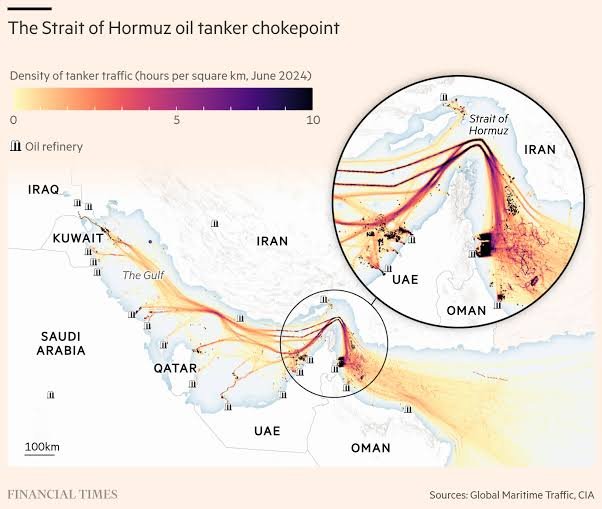
The announcement of a preliminary transit agreement between Iran and the Sultanate of Oman regarding the Strait of Hormuz marks a critical turning point in the months-long Persian Gulf shipping crisis. While the technical framework establishes a defined navigable corridor and joint waterway management, full operationalization remains tethered to broader geopolitical negotiations—principally the posture of the United States and the status of maritime blockades.
Here is an in-depth analysis of the draft agreement, its geopolitical bottlenecks, and its immediate and long-term ramifications for global energy markets.
1. The Anatomy of the Iran-Oman Transit Framework
Negotiations mediated by Muscat have produced a structural compromise intended to restore commercial maritime traffic through the 21-mile-wide choke point. The arrangement reflects a hybrid operational strategy aimed at addressing Tehran’s security demands while mitigating navigation risks for international commercial fleets.
                     PERSIAN GULF TRANSIT MODEL (PROPOSED)

                     ┌─────────────────────────────────┐
                     │    INBOUND TRAFFIC TO GULF      │
                     │  (Directly through Iran Waters) │
                     └────────────────┬────────────────┘
                                      │
                                  STRAIT OF
                                   HORMUZ
                                      │
                     ┌────────────────┴────────────────┐
                     │   OUTBOUND TRAFFIC FROM GULF    │
                     │  (Directly through Oman Waters) │
                     └─────────────────────────────────┘
- Routing Allocation: Inbound vessels entering the Persian Gulf will navigate primarily through designated Iranian territorial waters, while outbound commercial vessels will transit along routes adjacent to Omani waters.
- Joint Administrative Oversight: Tehran and Muscat intend to form a joint oversight protocol to monitor traffic, coordinate distress responses, and conduct preliminary mine-clearing sweeps.
- No Transit Tolls (Interim Phase): The proposed 60-day temporary agreement explicitly excludes transit fees or tolls on commercial shipping, aimed at easing immediate inflationary pressures on global commodities.
- Verification Sweeps: Initial trial transits will involve Iranian and regional escort vessels to certify clear sea lanes before full commercial access is granted to international tankers.
2. Geopolitical Bottlenecks: Reopening vs. Enforcement
Despite technical agreement on geographical coordinates, Iranian officials have made clear that a physical opening of the strait requires reciprocal geopolitical concessions.
The US Blockade Factor
Iranian Foreign Ministry spokesperson Esmaeil Baghaei emphasized that the primary threat to shipping security remains the U.S. naval blockade of Iranian ports and aggressive postures in adjacent waters. Tehran’s position is unambiguous: the technical transit channel with Oman cannot operate effectively while U.S. naval units actively interdict Iranian petroleum exports.
The 60-Day Memorandum of Understanding (MoU) Window
Diplomats view the Oman deal as a mechanism to reactivate the broader 14-point MoU signed earlier in the conflict. Under this structure:
- Naval Relief: The U.S. would lift sanctions waivers and pause port blockades, allowing limited Iranian crude sales.
- Diplomatic Clock: A 60-day window would be triggered to negotiate lasting protocols on nuclear monitoring, frozen asset access, and permanent Strait governance.
- Risk of Factional Friction: Internal political dynamics in both Washington and Tehran pose execution risks. Hardline factions within the IRGC insist on retaining absolute veto power over inbound ships, whereas U.S. defense officials reject any framework that codifies permanent Iranian unilateral control over an international waterway.
3. Global Oil & Financial Market Impact
The Strait of Hormuz is the world’s primary energy choke point, historically handling roughly 20 million barrels per day (bpd)—equal to ~20% of global seaborne petroleum trade and over 20% of liquefied natural gas (LNG).
The headline progress between Tehran and Muscat triggered an immediate repricing of geopolitical risk premiums across commodities and currency markets.
Market Sector Sensitivity Analysis
| Asset Class / Sector | Immediate Market Reaction | Mid-Term Transmission Mechanism | Key Risk Factor |
| Brent & WTI Crude | Downward Pressure ($80–$85/bbl range) | Unwinding of geopolitical risk premium; resumption of Gulf export volumes. | Renewal of tactical strikes or mine incidents. |
| LNG Markets | Moderate Easing | Easing of Asian spot prices as Qatari exports prepare for normalized throughput. | Bottlenecks in vessel insurance and re-flagging. |
| Tanker Freight Rates (VLCC) | High Volatility | War-risk insurance premiums drop from peak, but remain elevated until trial transits prove safe. | Lack of explicit US-Iran formal security guarantees. |
| Foreign Exchange (FX) | USD Softening; Energy-Importer Gain | Lower imported inflation benefits GBP, EUR, and INR; CAD and NOK experience modest headwind. | Federal Reserve interest rate path adjustments. |
| Global Fertilizers & Chemicals | Supply Stabilization | Normalization of Middle Eastern urea and ammonia exports, capping global agricultural input costs. | Prolonged delays in reaching “Phase Two” agreements. |
4. Key Takeaways & What to Watch Next
For energy traders, supply-chain strategists, and macroeconomic analysts, the coming days present critical indicators:
- The 48-to-72 Hour Rule: Watch for a joint tri-signatory statement involving Iran, Oman, and the International Maritime Organization (IMO) formally establishing the transit parameters.
- U.S. Counter-Concessions: Monitor whether the U.S. Department of the Treasury issues updated maritime waivers or modifies naval posture near the Gulf of Oman.
- Trial Run Execution: The physical passage of the first test tankers will serve as the true measure of operational safety, dictating whether commercial war-risk insurance rates drop back to sustainable baseline levels.